

Blog Archives


Blog Archives
The Irving & Irvine Towers across the Scottish Borders
Across the rugged landscapes of southern Scotland, particularly along the Anglo Scottish frontier, stand the remnants of a turbulent age defined by conflict, kinship, and survival.
Among the most evocative of these structures are the Border towers associated with the Irving and Irvine families, a network of fortified tower houses that once dotted the valleys of Dumfriesshire and the wider Borders. These towers were not merely residences; they were symbols of clan identity, instruments of defence, and witnesses to centuries of frontier warfare.
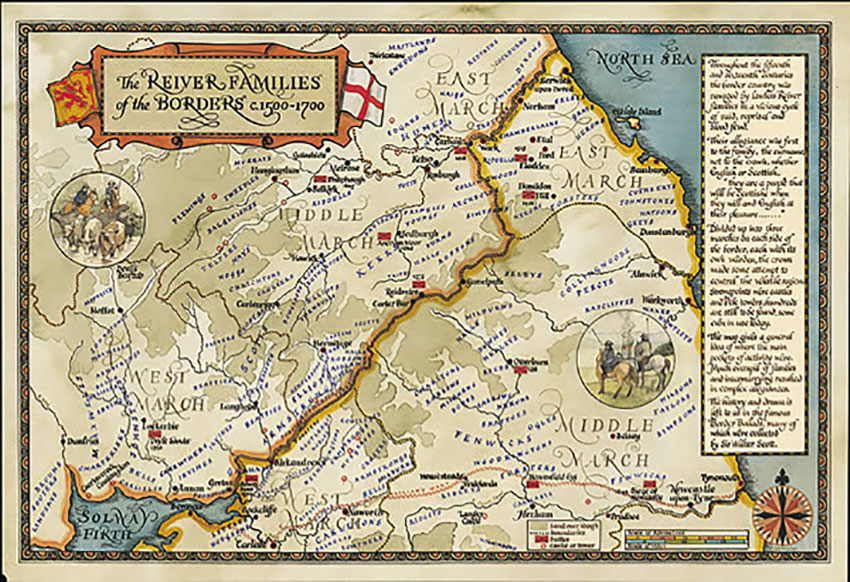
A Frontier of Conflict and Opportunity
From the late medieval period through the 16th century, the Scottish Borders were a region of persistent instability. Raiding, feuds, and shifting loyalties characterised everyday life. The notorious Border Reivers operated across national lines, often acting according to family allegiance rather than crown authority.
In response, families such as the Irvings and Irvines constructed fortified dwellings—commonly known as peel or pele towers—to protect against raids and rival clans.
The Nature of Border Towers
These towers were compact, highly defensible stone structures designed for both habitation and protection. Typically rising several storeys, they featured thick walls,
limited entry points, and elevated living quarters. A courtyard or barmkin often surrounded the tower, protecting livestock and supplies—critical assets in a raiding economy.
Such buildings were as much practical necessities as they were symbols of prestige and authority in a dangerous landscape.
Bonshaw Tower: The Principal Irving Stronghold
At the heart of this network stands Bonshaw Tower, near Kirtlebridge. Built in its present form during the 16th century, it replaced earlier structures and became the principal seat of the Irving family.
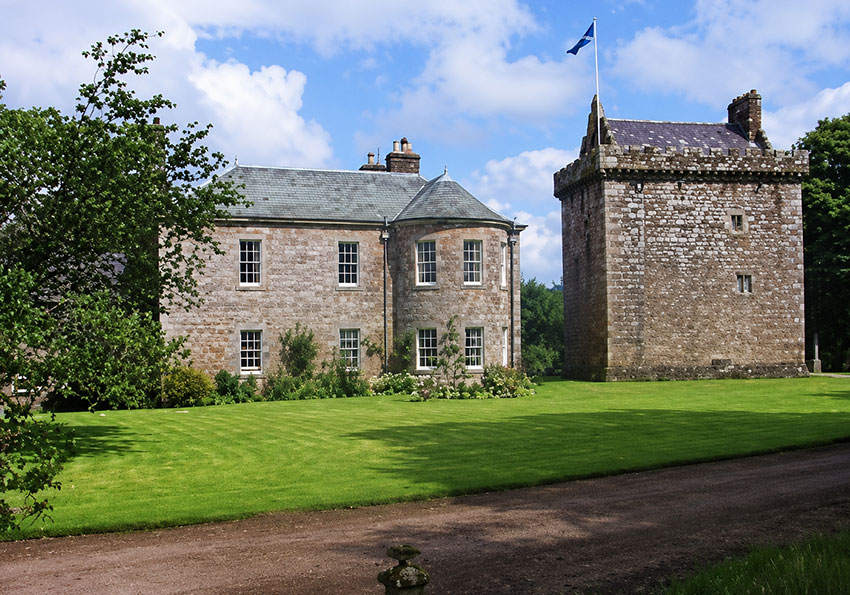
Bonshaw’s history reflects the turbulence of the Borders:
- It was attacked, burned, and rebuilt during periods of Anglo Scottish conflict.
- It withstood sieges and played a role in local clan feuds.
- It remained associated with the Irving family for centuries, reinforcing its significance as a hereditary stronghold.
The Wider Network of Irving Towers
The Irvings maintained several additional towers within their territory, including Robgill Tower and the now-ruined sites of Woodhouse, Stapleton, and Cove. These formed a defensive chain protecting the Kirtle valley and nearby crossing points into England.
This distribution highlights how tower houses functioned collectively, providing overlapping protection and reinforcing clan presence across the region.

Daily Life in the Towers
Life within these towers demanded constant readiness. Families lived in upper storeys while food and supplies were stored below. In times of danger, neighbours might gather within the tower walls, turning a private home into a communal refuge.
Thus, the Irving and Irvine towers represent not only military architecture but also the everyday resilience of Border communities.

Decline and Legacy
Following the Union of the Crowns in 1603, the lawlessness of the Borders gradually subsided, reducing the need for fortified homes. Many towers fell into disrepair or were adapted into more comfortable residences.
Yet their legacy endures. Surviving towers such as Bonshaw and Robgill remain powerful symbols of a unique frontier culture—one defined by conflict, loyalty, and endurance.
Conclusion
The Border Irving and Irvine towers stand today as enduring monuments to a dramatic chapter in Scottish history. Built for survival in a hostile landscape, they embody the strength and identity of the families who lived within them. Their weathered stones continue to tell stories of siege, alliance, and resilience—stories that remain central to the heritage of the Scottish Borders.